
How to Adjust Sprinkler Heads: Spray, Rotor and Impact Heads Step by Step
Water arcs across the driveway, runs down the sidewalk and soaks the fence, while a patch of lawn near the porch turns brown. That pattern points to a few sprinkler heads that have drifted out of position, and the fix takes a small tool and a few minutes per head. This guide shows how to adjust sprinkler heads step by step for the three types found on most home systems: pop-up spray heads, rotors and impact heads. You will see how to tell them apart, which tool each one takes, how to set the arc and the distance, and how to test the result so every part of the lawn gets its share.
Signs Your Sprinkler Heads Need Adjusting
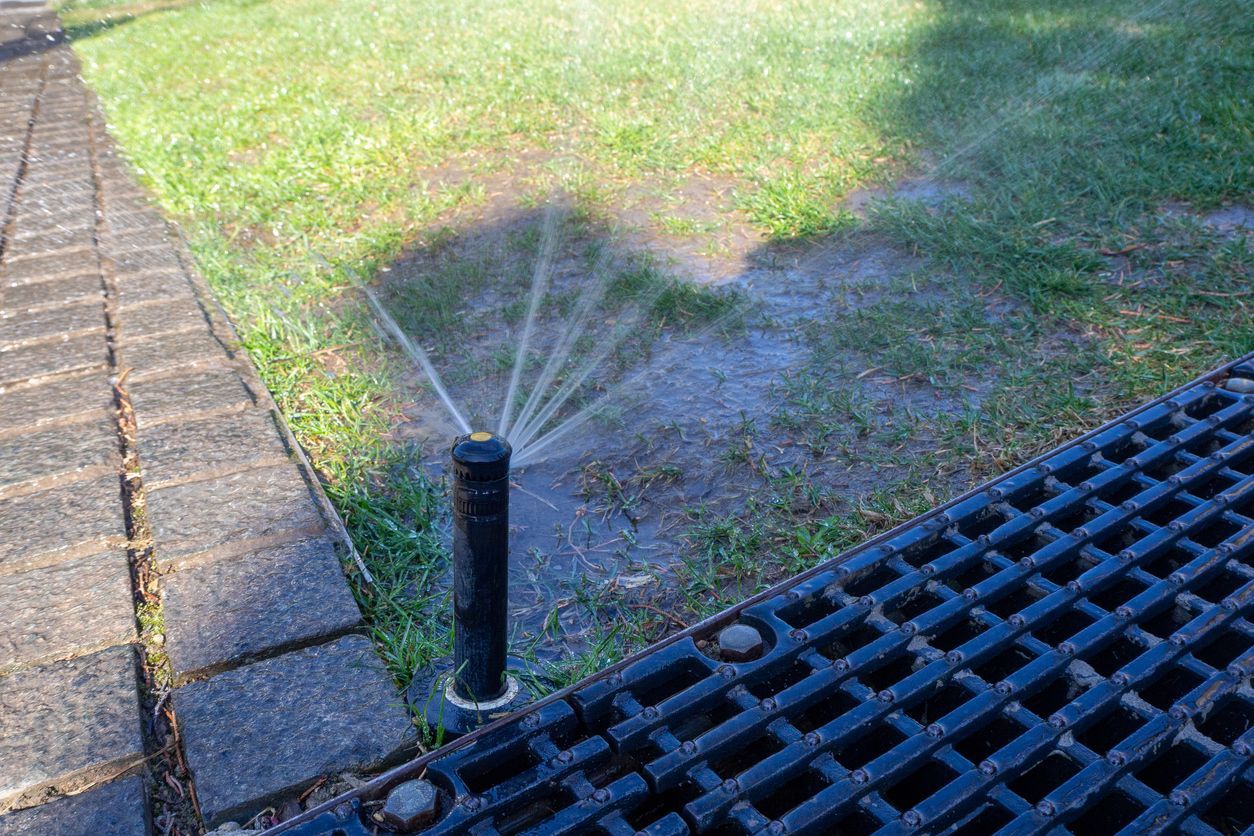
Walk the yard while a zone runs and the problems show themselves. Spray lands on pavement, walls, windows or the street. One part of the zone is soaked and puddling while another part stays dry. A fan of water is too wide, too narrow or aimed at the wrong spot. A head sits low in the grass, stands too high or leans to one side.
Heads drift out of line for ordinary reasons. Mowers and trimmers knock them sideways, foot traffic presses on them, and soil settles around the bodies after months of rain and irrigation. Seasonal wear loosens the stem and nozzle, so a head turns a little further each time it pops up. A busy season of lawn work and weather is enough to point a head at the sidewalk.
Sun and shade ask for different coverage as well. A lawn on the south side of the house dries out fast and needs steady, overlapping spray. A shaded strip under an oak holds moisture longer and takes less. Checking each head against the spot it serves shows where to start.
Aim matters in San Antonio because San Antonio Water System rules prohibit water waste at all times, and that includes lawn watering overspray and runoff.
Before You Start: Identify the Head Type and the Right Tool
Three head types cover most residential systems, and each one adjusts a different way. A quick look at what is in the ground saves time.
Pop-Up Spray Heads
A pop-up spray head throws a fixed fan of water, and nothing in the stream moves. The throw is short, which suits small lawns, beds and the strips beside walks. The stem rises a few inches when the zone starts and drops back when it stops.
Rotors
A rotor sends one stream, or a few thin ones, sweeping slowly across a much larger area. Watch the zone for a moment and you will see the stream travel from one edge of the pattern to the other and back again.
Impact Heads
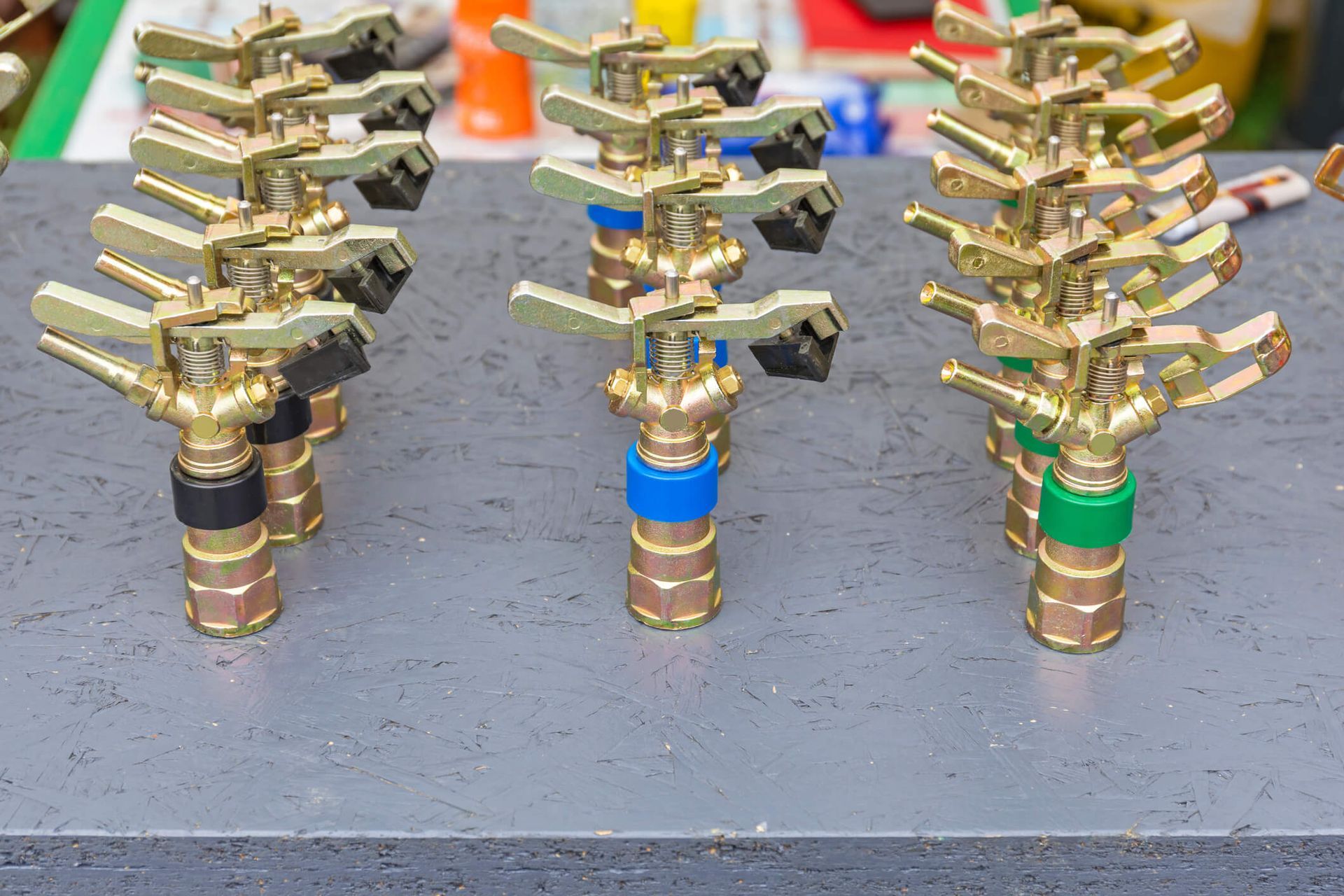
An impact head has a swinging arm that taps the stream and pushes the head around a little with each strike. The ticking sound gives it away. Many sit on a riser above the soil.
Spray nozzles come in two kinds. A fixed-arc nozzle is molded as a quarter, half or full circle, and the only way to change it is to swap in a different nozzle. An adjustable-arc nozzle has a ring on top that sets any arc from narrow to wide. If a ring turns on top of the nozzle, the arc can be adjusted.
Gather a small flathead screwdriver for spray nozzles, the manufacturer's rotor key for rotors, and a pull-up tool or pliers to hold a spray stem up while you work. Rotor keys are made for specific brands, so match the key to the head in your yard. If you cannot tell which head you have, a look at how sprays, rotors and rotary nozzles differ in types of sprinkler heads shows each one side by side.
How to Adjust a Pop-Up Spray Head
Adjusting sprinkler heads goes best with the zone running, because every change shows up right away. Start the zone from the controller and stand where you can see the whole pattern. Pull the stem up by hand or with a pull-up tool, and hold it up near the base so the nozzle stays in the air while you work. Expect a little spray on your hands.
Set the first edge of the pattern. Turn the whole stem until one edge of the fan points where the lawn begins, such as along the edge of a sidewalk. On most adjustable nozzles that edge stays put while you change the arc, so aim it before anything else.
Set the other edge next. Turn the ring on top of the nozzle to open or close the fan until the far edge lands at the end of the area you want to water. A quarter turn or less at a time gives you control. A fan opened too wide starts to throw water onto whatever sits beyond the lawn.
The screw in the center of the nozzle shortens the throw. Turning it in cuts the distance, and turning it out adds distance. Stop when the water reaches the next head or the edge of the lawn and no further. Cutting the throw too far leaves a thin, weak spray, so make small turns and look after each one.
Let the head run a full cycle after each change. Watch where the water lands on the grass, then adjust again. Small changes are easy to read, and a big turn takes several tries to undo.
Sometimes the pattern simply does not fit the area. A corner that needs a quarter circle will never look right on a nozzle set to a wide fan. In that case, unscrew the old nozzle by hand and thread on a quarter, half, three-quarter or full-circle nozzle that matches the space. The stem and body stay in place, and the new nozzle gives the head the right shape from the start.
How to Adjust Rotor and Impact Heads
Sprinkler head arc adjustment on a rotor takes a rotor key, a steady hand and some patience. Start the zone and stand behind the head, facing the same direction the stream travels. From that spot, left and right match what you see on the lawn.
Find the fixed stop first. Gently turn the turret, the round top of the head, by hand until it reaches its end point. That stop is the fixed edge of the arc. Turn gently, and a model that resists has reached its stop.
Now insert the key into the arc socket on top of the head and turn it to widen or narrow the arc. The moving edge shifts while the fixed edge stays where it is. Rotors turn slowly, so wait for a full sweep after each change before you judge the result.
The fixed edge sits on the left of the pattern for some brands and on the right for others, and the direction the key turns to widen the arc also varies by brand and model. Follow the plus and minus markings on the cap, which show the direction that widens or narrows the arc for that head.
The radius screw on top of the nozzle shortens the stream. Turning it in makes the stream hit the deflector sooner and fall shorter, which trims water that lands past the edge of the lawn. Use small turns and watch where the stream lands before turning again.
Impact heads set the arc with two trip collars on the arm bracket. Slide the collars closer together to narrow the arc and further apart to widen it. Flip the trip pin up and the head runs a full circle. If the stream reaches too far or lands in a heavy rope of water, the diffuser screw near the nozzle breaks it into a softer spray that falls closer to the head.
Test Coverage Zone by Zone
Run each zone once the adjustments are done and watch the whole cycle. A rotor needs a full rotation before you can judge it, so give each one time to sweep from edge to edge.
Look for head-to-head coverage, which means each head's spray reaches the next head. EPA WaterSense recommends head-to-head coverage and says heads that spray driveways, sidewalks or walls should be turned toward the landscape. Place a flag or a stake at every dry spot and every place where water lands on pavement, then walk back through and adjust those heads one at a time.
Texas irrigation rules point the same way. Pop-up spray and rotary heads must direct flow away from adjacent surfaces and sit at least four inches from hardscape, so a head that wets a wall or a sidewalk is a head to fix.
A catch can test shows how evenly a zone waters. Spread straight-sided containers, such as tuna cans or short cups, across the zone, run it for a set time such as 15 minutes, and compare the depth of water in each one. Uneven depths point to the heads that need another look. Divide the average depth in inches by the minutes the zone ran, then multiply by 60 to get the rate in inches per hour.
Recheck every zone at the start of each season and after lawn work, since mowers and edgers move heads out of position. A fall walk-through before winter and a spring walk-through before the summer heat catch most drift early.
When Adjustment Is Not the Fix
Some problems stay put no matter how many turns you give a screw. A clogged nozzle or filter screen sends a weak, lopsided spray, and the cure is cleaning. Unscrew the nozzle, rinse the screen and thread it back on. A head that sits low in the grass, tilts or has sunk below the lawn needs the body raised and the soil packed firmly around it.
A head that will not pop up or will not rotate usually has dirt or debris in the riser. A stripped adjustment screw, a crack in the body or water that leaks around the base means the head itself has reached the end of its life. Replacing a broken or sunken head takes the guesswork out of the zone, and sprinkler system repairs from a licensed technician cover broken and clogged heads.
Water pressure shapes the spray as well. Pressure above a nozzle's recommended level causes excessive flow, misting and uneven coverage, so a fog that drifts away from the lawn points to high pressure. Large droplets and a short throw point to low pressure. Neither one responds to an arc or radius setting.
Mismatched nozzles in one zone create trouble too. Texas rules call for all heads in a zone to apply water at the same rate, so a spray nozzle mixed in with rotors floods one corner while another stays dry. How many heads a zone can carry depends on the flow available, which is covered in how many sprinkler heads can go on one zone.
Clean first and replace when the body is cracked or the riser sticks.
Adjusting a sprinkler head comes down to three moves: identify the head, turn the screw in small steps and test the zone. For help with the rest, Texas Sprinkler Pros offers sprinkler system maintenance that includes sprinkler head adjustments to ensure proper coverage and prevent overspray onto sidewalks or driveways, along with seasonal check-ups and leak detection for San Antonio and surrounding areas. To have a licensed technician set your heads, schedule a free estimate.