
Types of Sprinkler Heads: Sprays, Rotors and Rotary Nozzles Explained
Most in-ground systems rely on three types of sprinkler heads: spray heads, rotors and rotary nozzles. Bubblers and drip lines look after beds and trees. The head type sets how far water throws, how fast it lands on the soil and which heads can share a zone, so the choice shapes both the look of a lawn and the size of a water bill. This guide shows what each head looks like, how it works and where it belongs in a yard. By the end, you will be able to recognise every head in your own system and know which one suits each part of your landscape. Along the way you will see what Texas irrigation rules say about layout, and what San Antonio soil and water costs mean for your choices.
How a Pop-Up Sprinkler Head Works
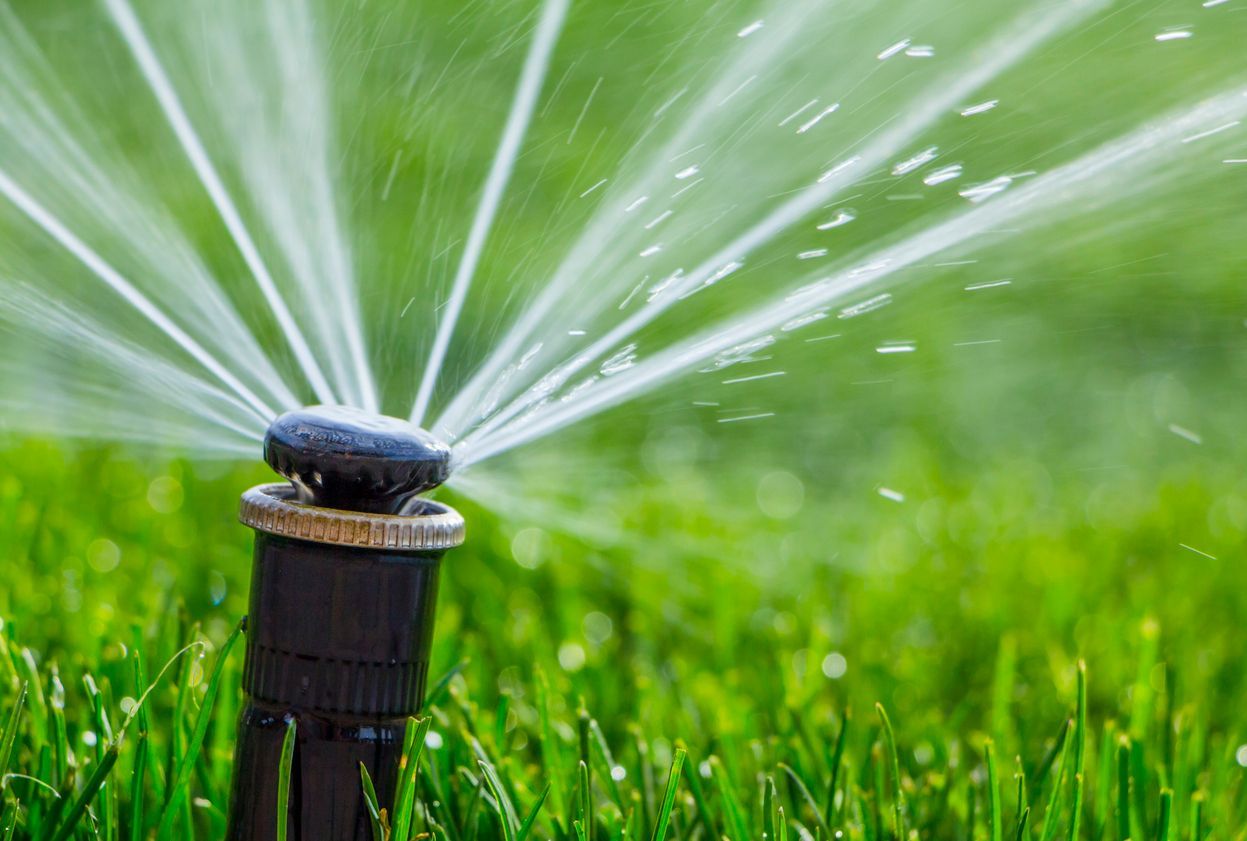
Every pop-up head shares the same basic parts. The body is the plastic housing buried flush with the lawn, and the inlet at its base connects to the pipe. When a zone turns on, water pressure pushes the riser, also called the pop-up stem, up out of the body. The nozzle on top of the riser shapes the water into its pattern. When the zone shuts off, a spring pulls the riser back down, and a wiper seal around the stem scrapes off dirt and grass on the way so the head closes cleanly.
Two optional parts affect efficiency. A pressure regulator inside the body holds the nozzle at a steady pressure even when the line pressure runs high. A check valve keeps water from draining out of the lowest heads after a cycle, which prevents puddles and soggy spots at the bottom of a slope.
Pop-up heads sit flush with the soil, which makes them a good match for lawns that get mowed. Fixed shrub heads sit on risers above the plants they water, so they belong in beds.
Nozzle arcs come in quarter, half and full circles, and adjustable arcs can be set to fit a corner or an odd angle. The nozzle sets the arc, and the same body accepts many nozzles. A standard spray body takes a fixed spray nozzle or a rotary nozzle, which is why the spray and rotary sections below keep returning to the same hardware.
Spray Sprinkler Heads
Spray sprinkler heads throw a fixed fan of water. Nothing in the stream moves, so the nozzle alone sets the pattern and the radius. The throw is short, which suits small lawns, beds and the areas beside patios and walks. Strip nozzles shape a long, narrow rectangle of water for thin bands of grass between a driveway and a fence.
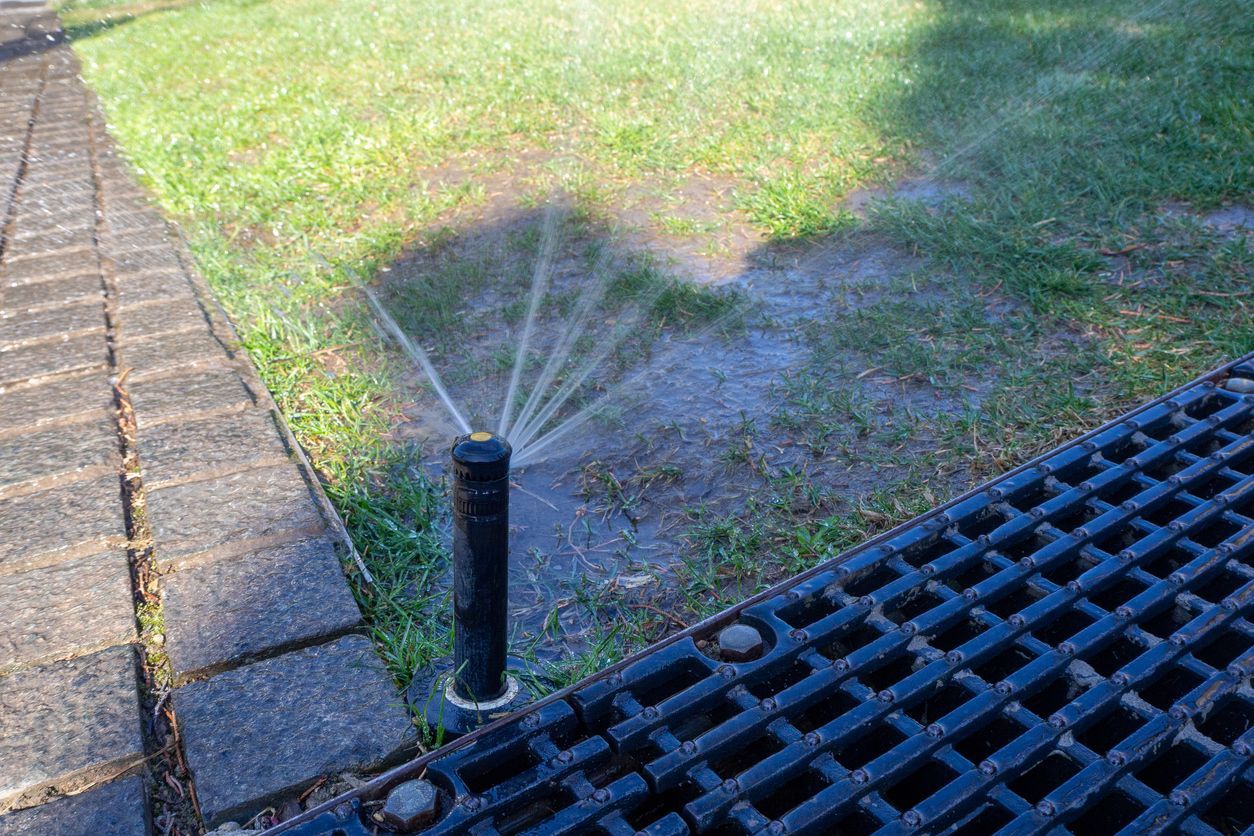
Spray heads put water down fast. On clay soil and on slopes, water arrives faster than the ground can take it in, and the extra runs off toward the street. Research shows as much as 30 to 40% of irrigation water can be lost to runoff when systems run too long.
Pressure adds a second challenge. Sprinklers often sit where line pressure is higher than the nozzle's recommended level, which causes excessive flow, misting, fogging and uneven coverage. A fine mist drifts in the wind and leaves dry patches behind. Spray nozzles also have small openings, so grit and minerals in the water clog them more often than they clog larger heads.
Texas sets a practical limit on where new spray heads can go. Under the state's irrigation rules, new systems may not use above-ground spray devices in landscapes under 48 inches wide or long that border paved traffic surfaces on two or more sides. That rule keeps spray heads off the thin turf strip between a sidewalk and a street. Narrow strips like that call for a different watering method.
Rotor Sprinkler Heads
Rotor sprinkler heads send a single stream, or a few streams, sweeping around in an arc. The moving stream reaches much farther than a fixed fan, so one rotor covers an area that would take several spray heads.
Two kinds are in use. Gear-driven rotors turn the nozzle with a small internal gear train. They run quietly and are now the standard choice. Impact rotors have a spring-loaded arm that taps the stream and nudges the head around a little with each strike, which makes the familiar ticking sound.
Rotors fit medium and large open turf, such as a wide front lawn or a back yard with room to run. The long throw means fewer heads across the same area. Rotors also apply water slowly. Sprinkler precipitation rates range from 0.5 to more than 1.5 inches per hour, depending on the type of head, the pressure and the spacing, and rotors sit toward the gentle end of that range. A slow rate gives slopes and slow-draining soil time to soak up each cycle.
Rotors come with trade-offs. They need more pressure than spray heads to turn and throw their full distance. Each head costs more. Setting the arc and radius takes more adjustment than snapping on a spray nozzle, because every rotor has to be tuned to the edges of the lawn it covers. Small and narrow areas leave a rotor throwing farther than the space allows, so those areas stay with sprays or rotary nozzles.
Rotary Nozzles
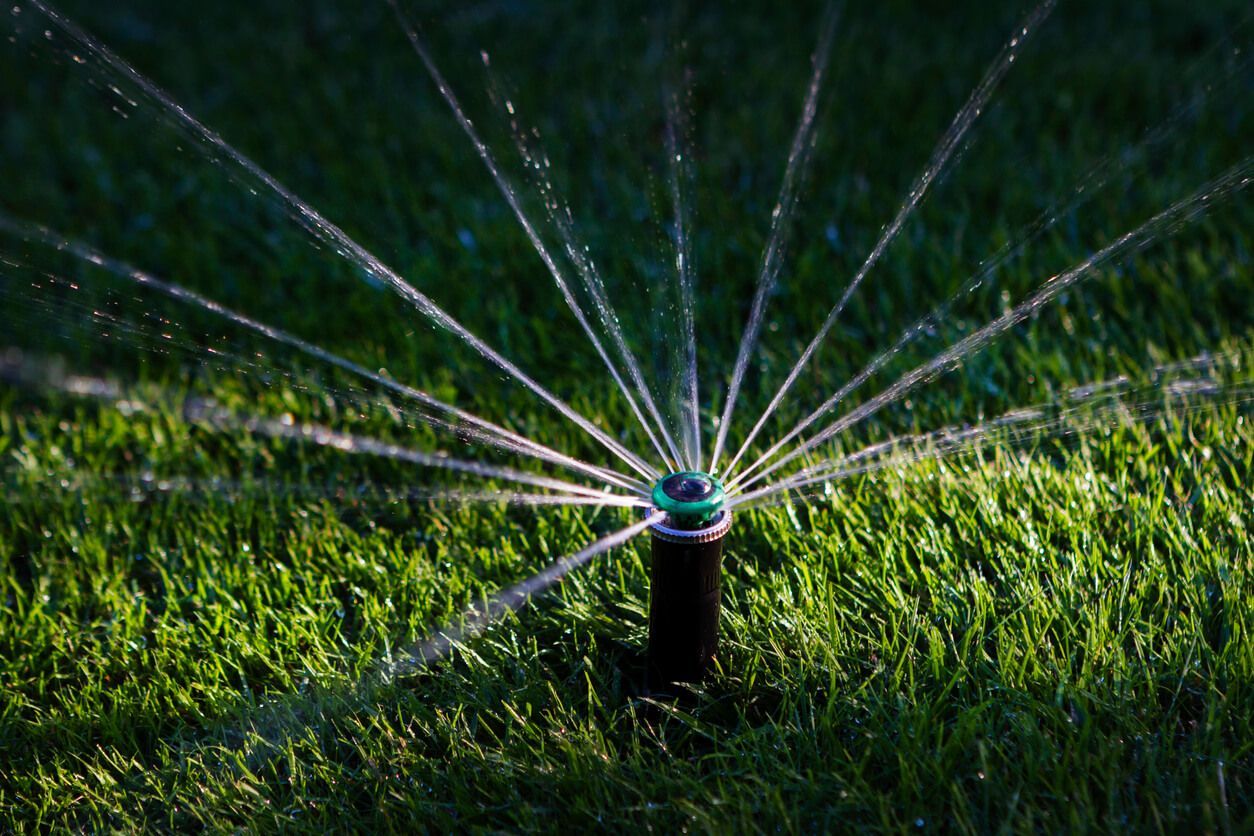
Rotary nozzles are multi-stream, multi-trajectory nozzles. Several thin streams leave the nozzle at different angles while it turns, and it threads onto an ordinary pop-up spray body in place of a standard spray nozzle.
The names cause confusion, because some labels call rotors "rotary sprinkler heads." A rotor is a whole head with its own body and its own turning mechanism. A rotary nozzle is a nozzle swap on a spray body you may already own.
The swap changes how the zone behaves. Application is slower and more even, and the droplets are larger, so less water drifts off as mist. In an independent long-term field study, multi-stream rotational nozzles cut precipitation rates from more than 2 inches per hour to 1 inch per hour, with a 45% relative improvement in distribution uniformity over traditional nozzles. EPA calculates that the average household with an in-ground system could save about 2,400 gallons a year by replacing standard spray nozzles with higher-efficiency models. A slower rate means less runoff on clay and on slopes.
Rotary nozzles suit mid-size areas and sloped lawns. They also work as a retrofit, since a spray zone that already runs too fast can take new nozzles on its existing bodies, with no new pipe or heads.
The trade-offs are time and cleanliness. Slower application means longer run times for each zone. The fine passages inside the nozzle need clean water and a filter to stay open.
Bubblers, Shrub Heads and Drip for Beds and Trees
Some heads serve beds and trees. Bubblers flood a small basin at a tree well or a planter, so water soaks in right where the roots are. Shrub heads sit on fixed risers above plantings and belong away from walkways, where their spray stays on the plants. Drip lines deliver water at the root zone in beds and gardens.
Texas Sprinkler Pros' water conservation page describes drip for gardens, flower beds and delicate plants, and zone control that waters lawn, beds, shrubs and trees separately. That separation follows the state's design rules, which call for zones divided by plant type, microclimate, topography, soil and hydrology.
Each of these heads goes on its own zone. A bubbler or a drip line delivers water at a very different rate than a lawn head, and a tree has different needs than turf. Giving them a separate valve lets each planting get its own run time.
Sprays vs. Rotors vs. Rotary Nozzles at a Glance
The table below puts the head types side by side, using the ranges described above.
| Head type | Typical use | Throw range | How fast it applies water | Pressure needs | Best site conditions | Upkeep |
|---|---|---|---|---|---|---|
| Spray | Small lawns, narrow strips, beds, areas beside patios and walks | Short | Fast | Needs line pressure held to the nozzle's rating, or it mists | Small, flat areas on soil that drains quickly | Small openings clog with grit and minerals |
| Rotor | Medium and large open turf | Long | Slow | Higher pressure than sprays | Slopes, slow-draining soil, wide lawns | Arc and radius adjustment for each head |
| Rotary nozzle | Mid-size lawn areas, retrofits on spray zones | Mid-range | Slow and even | Runs on a spray body at its rated pressure | Slopes, clay soil, breezy yards | Fine passages need clean water and filters |
| Bubbler | Tree wells and planters | Short, at the base of the plant | Floods a small basin | Set by its own zone | Trees, shrubs and planters | Keep the basin clear so water soaks in |
Reading the table takes two steps. Area size picks the family: sprays for small and narrow spaces, rotary nozzles and rotors for larger ones. Soil and slope then pick between a spray and a rotary nozzle, since clay and hills favor the slower application of the rotary nozzle.
Why Different Head Types Can't Share a Zone
Texas writes the reason into its irrigation rules. Every emission device in a zone must irrigate at the same precipitation rate. Sprays, rotors and rotary nozzles put water down at different rates, so a mixed zone floods one part of the lawn while another part stays dry. By the time a rotor has wet its patch, a spray head nearby has already over-watered its corner.
The same rules shape the rest of the layout, and licensed irrigators follow them on every design. Spacing between heads stays within the manufacturer's published radius, and never exceeds it by more than 10%. Devices run at the manufacturer's recommended pressure, which a designer reaches with flow control valves, pressure regulators or pressure-compensating spray heads. Pop-up spray and rotary heads point away from adjacent surfaces and sit at least 4 inches from hardscape, and a system may not spray onto sidewalks, driveways or streets.
A licensed irrigator or licensed irrigation technician must be on site while a system is installed. The number of heads one zone can carry depends on the flow available to its valve.
Choosing Sprinkler Heads for a San Antonio Yard
Many yards across Central Texas sit on clay soil, which absorbs water slowly. Fast-applying spray heads can outrun the soil and send water down the street. Cycle-and-soak scheduling answers this with several short runs that leave time for the ground to drink between them. In one worked example from Texas A&M AgriLife, spray heads applying 1.5 inches per hour on heavy clay should run no more than 5 minutes per cycle. High pressure adds misting on top of that, and the mist drifts off in the wind.
Two upgrades address both problems. Rotary nozzles can go onto existing spray zones, and pressure-regulated bodies hold the nozzle at its rated pressure. WaterSense labeled spray bodies with built-in regulation can save a typical household nearly 5,600 gallons and $60 a year where pressure runs at 60 psi or above. San Antonio Water System pays a $100 rebate per zone for converting every head in a zone to an approved pressure-reducing option, and a SAWS irrigation consultation comes before any work begins.
Texas Sprinkler Pros handles this work through sprinkler system repairs, including broken sprinkler heads, and installs high-efficiency heads with pressure regulation and more precise spray patterns. Sprinkler head adjustments are part of the seasonal visits on the sprinkler system maintenance page. The work is done by a licensed irrigator, License # IRR-23-0026477, with service across San Antonio, New Braunfels, Schertz and Bulverde.
A Simple Rule of Thumb
Use sprays for small and narrow areas, rotary nozzles where sprays waste water, rotors for big turf, and drip or bubblers for beds and trees. Texas Sprinkler Pros offers free estimates for system upgrades, and you can Schedule Free Estimate to have a licensed irrigator look over the heads in your yard.